


No-Residue Agents · ISI-Marked Extinguishers · Ships Nationwide No-Residue Agents
Fire Extinguishers for Hospitals and Labs
Clean agent and CO2 where residue would destroy equipment
-
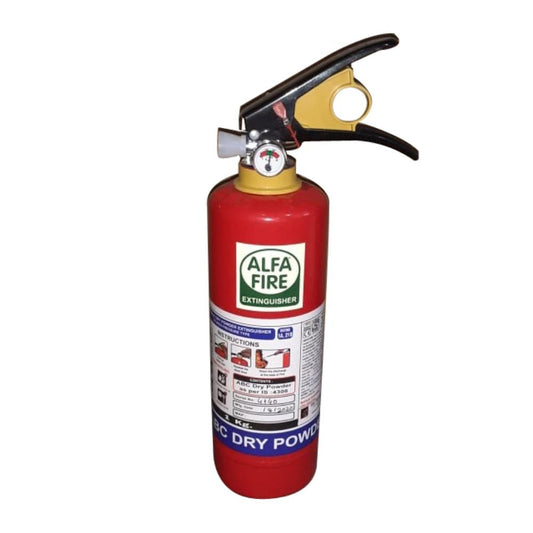
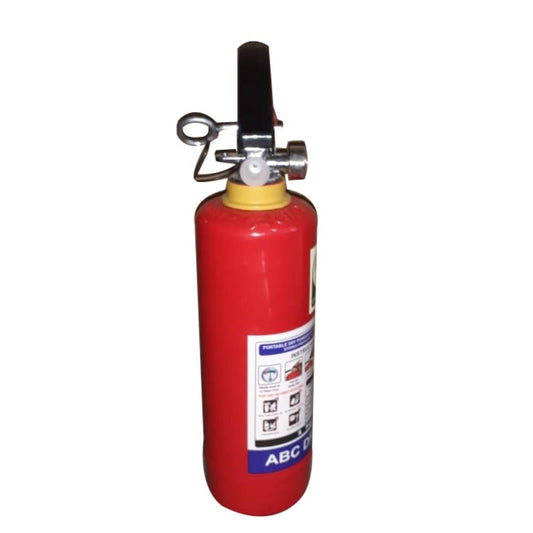
Alfa Fire ABC Dry Powder Fire Extinguisher – MAP 50% – ISI Marked – BIS Approved – Class A B C Fire Safety – Available in 1kg to 9kg | Home, Office, Car & Industrial Use
Regular price From ₹ 1,039.00Regular price From ₹ 1,039.00 Sale priceUnit price per₹ 2,079.0050% -
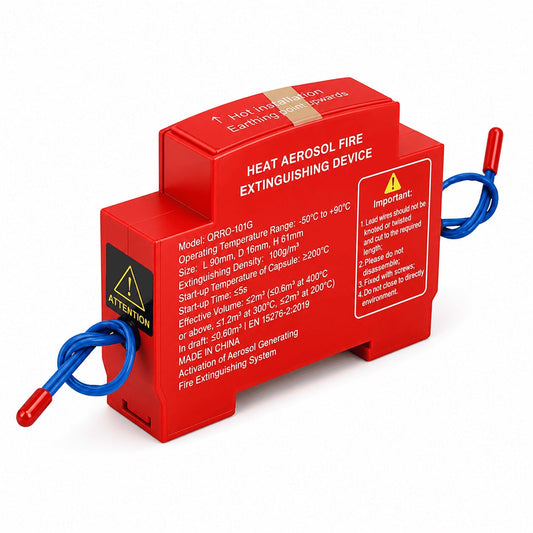
Automatic Aerosol Fire Suppression Device | Heat Activated Fire Extinguisher for Electrical Panels, Server Racks & Battery Cabinets
Regular price ₹ 1,349.00Regular price ₹ 1,349.00 Sale priceUnit price per₹ 2,699.0050% -
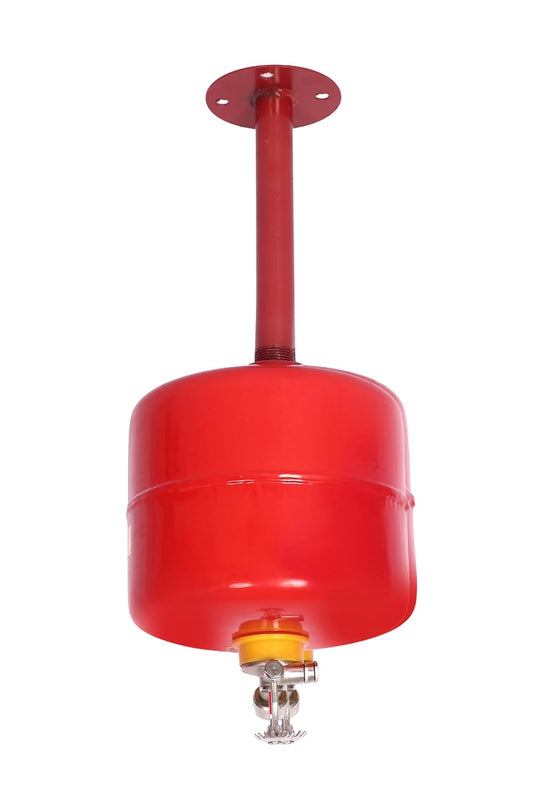
Alfa Fire Modular Ceiling-Mounted Fire Extinguisher – MAP 50 – Refillable | Available in 2Kg, 5Kg & 10Kg | Class ABC & Electrical Fire | ISO Certified
Regular price From ₹ 2,050.00Regular price From ₹ 2,050.00 Sale priceUnit price per₹ 2,550.0019% -
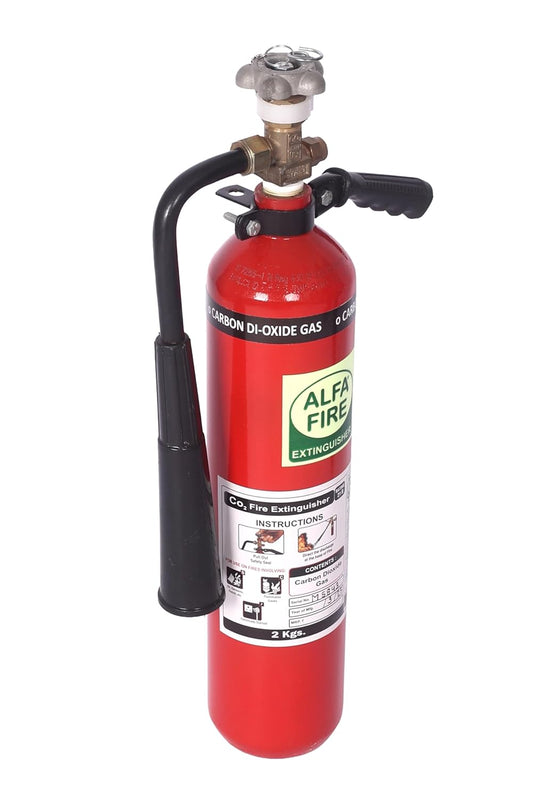
CO₂ Fire Extinguisher – Refillable | ISI Marked | 5-Year Content Expiry | Best for Electrical Fires & Offices
Regular price From ₹ 4,011.00Regular price From ₹ 4,011.00 Sale priceUnit price per₹ 5,500.0027% -
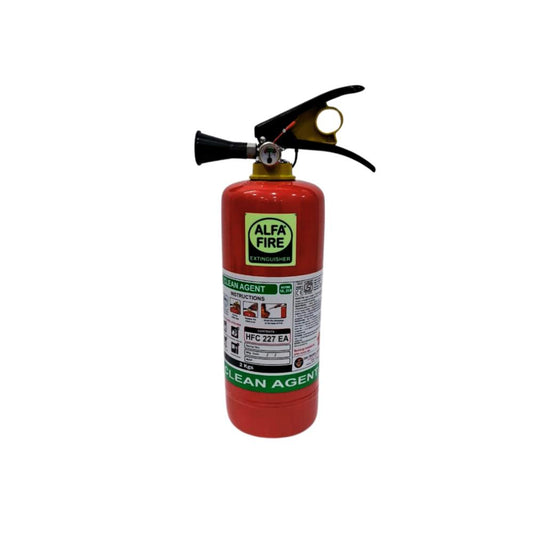
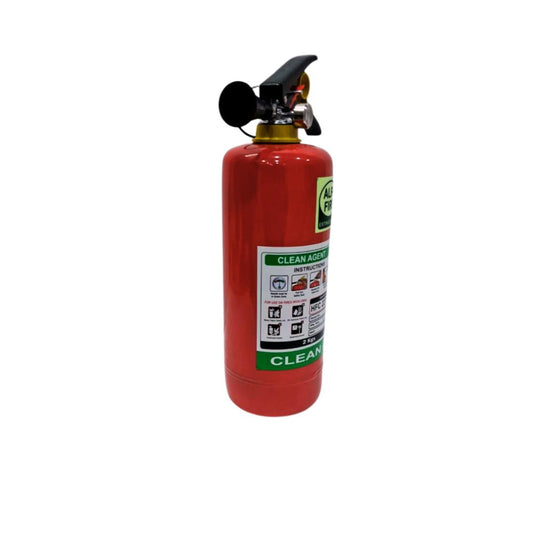
Alfa Fire Clean Agent Fire Extinguisher – Refillable – 5-Year Expiry – ISI Marked – Premium Mild Steel Body – Available in 2kg & 4kg | Office, Lab, Server Room Safety
Regular price From ₹ 9,499.00Regular price From ₹ 9,499.00 Sale priceUnit price per₹ 13,599.0030%



Read more about hospital and laboratory fire safety
In a hospital or a laboratory the extinguisher has to deal with two problems at once: put the fire out, and not destroy what is in the room doing it. That rules out dry powder almost everywhere that matters. Cover starts at ₹ 1,349.00.
Why residue matters more here
ABC dry powder works, and it is rated for electrically started fires. But mono ammonium phosphate is mildly corrosive, becomes conductive as it takes up humidity, and travels into every opening in the room. In a diagnostic lab or an imaging room, the equipment that survives the fire often does not survive the powder, and the downtime costs more than the fire did.
Clean agent and CO₂ leave nothing behind. That is the whole argument, and it is why they cost what they cost.
What goes where
| Area | What to use | From |
|---|---|---|
| Diagnostic, imaging and equipment rooms | Clean agent, no residue | ₹ 9,499.00 |
| Laboratory benches and pathology | 2kg CO₂ within reach of the bench | ₹ 4,011.00 |
| Wards, corridors and waiting areas | 4kg ABC dry powder, signposted | ₹ 1,039.00 |
| Server room, PACS and records | Clean agent, or an automatic device inside the rack | ₹ 1,349.00 |
| Plant room or unmanned store | Modular ceiling-mounted unit | ₹ 2,050.00 |
| Clinic, dental surgery or small practice | 2kg CO₂ at the equipment, 2kg ABC on the escape route | ₹ 4,011.00 |
Occupied spaces
CO₂ works by displacing oxygen, which is exactly why it is excellent in an unoccupied rack room and why it needs thought in a small, sealed, occupied space. Clean agent is used at concentrations people can be exposed to briefly, which is the practical reason it tends to be specified for rooms staff work in during the day.
Anywhere oxygen is stored or piped is a separate conversation. Oxygen-enriched air makes materials burn far more readily than normal, and the answer there is a documented fire plan rather than a choice of cylinder.
Before you buy
Clean agent and CO₂ both carry a five-year content life, dry powder three years. CO₂ cylinders have no pressure gauge — they are checked by weight, which is normal and not a fault. Every extinguisher ships with a wall mount.
Hospitals, diagnostic chains, laboratories and healthcare fit-out contractors are supplied in bulk, quoted against the requirement, with a response within one working day.
Also worth a look: electrical panels, home and office, the full price list.
Hospital and laboratory fire safety — common questions
Which fire extinguisher is used in a hospital?
It depends on the room. Clean agent from ₹ 9,499.00 or CO₂ from ₹ 4,011.00 wherever there is equipment, because neither leaves a residue. ABC dry powder from ₹ 1,039.00 on wards, corridors and waiting areas, where general cover matters more than protecting hardware.
Why not use dry powder in a laboratory?
The powder is mildly corrosive, becomes conductive as it absorbs humidity, and gets into every opening in an instrument. Equipment that survives the fire frequently does not survive the clean-up, and the replacement cost and downtime usually exceed the fire damage.
Clean agent or CO₂ for a diagnostic room?
Clean agent if staff work in the room during the day, because it is used at concentrations people can be exposed to briefly. CO₂ displaces oxygen, so it suits an unoccupied equipment or server room better.
What does a clinic or dental surgery need?
Two units cover most small practices: a 2kg CO₂ near the equipment and a 2kg ABC unit on the escape route. Placement matters — visible, wall-mounted with the top between about 1 and 1.5 metres, and reachable without crossing the hazard.
Why does the CO₂ extinguisher have no pressure gauge?
CO₂ is stored as a liquid, so a gauge would read full until the cylinder was nearly empty. They are checked by weighing instead. A missing gauge on a CO₂ unit is correct, not a defect.
Equipping a hospital or diagnostic chain?
Hospitals, laboratories, diagnostic chains and healthcare fit-out contractors. Tell us the requirement and we will respond within one working day.
Talk to Our Team
Bulk and B2B enquiry
Tell us the requirement. We respond within one working day.
We use these details only to respond to your enquiry. Privacy policy
Enquiry sent
Our team will review the requirement and get back to you.